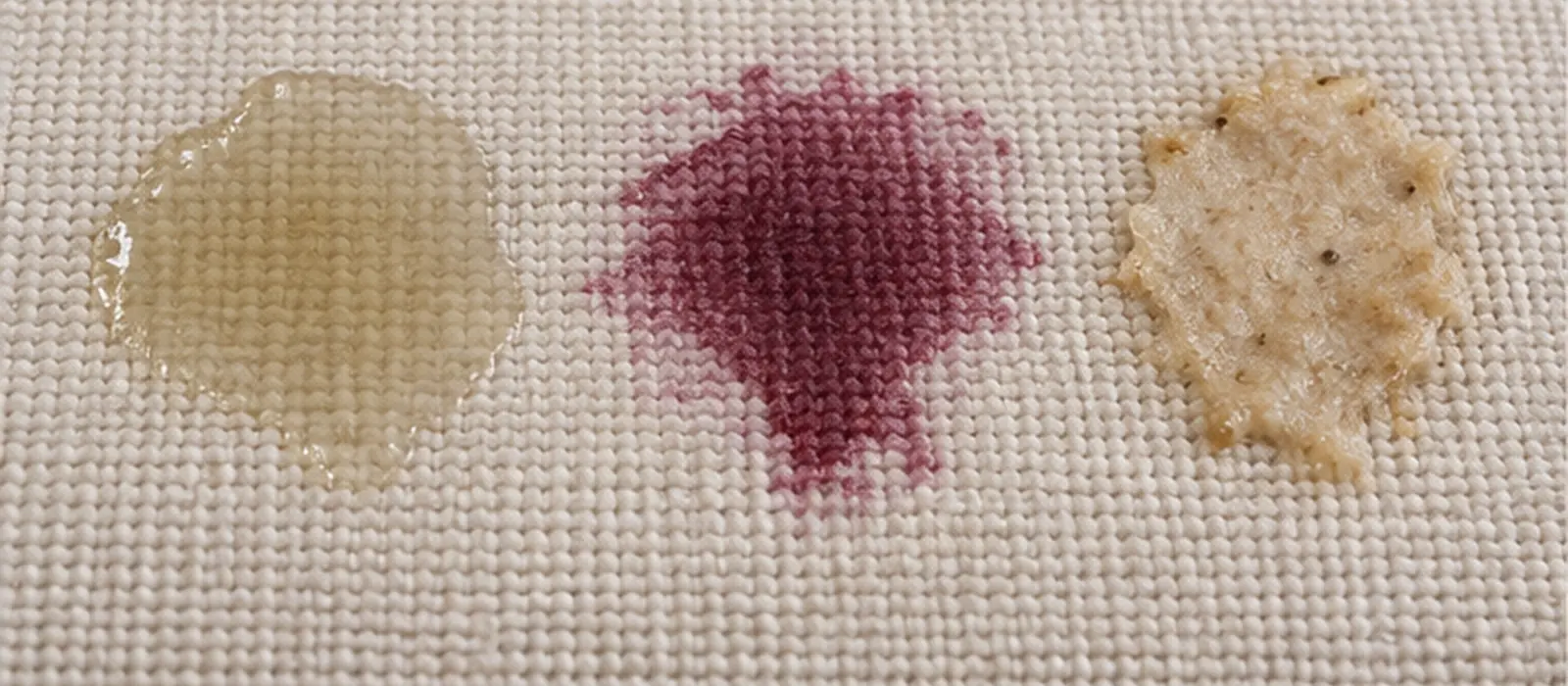
Tannin stain
Tea, coffee, wine, fruit juice and beer. Treated with acidic chemistry — the mirror image of protein stains — and set or darkened by the alkaline products people usually reach for.
A tannin stain comes from a plant-derived source: tea, coffee, red wine, fruit juice, beer and most soft drinks. Tannins are natural compounds found widely in plants, and they are concentrated in exactly the things people spill on sofas.
Tannin is the mirror image of protein in cleaning chemistry. A majority of tannin-removal agents are acidic, where protein-removal agents are alkaline. Acidic cleaners handle mineral deposits, rust and tannin marks; alkaline cleaners handle grease, oil and protein.
This makes tannin the group most often made worse by a well-meant intervention. General-purpose household sprays are typically strongly alkaline, because they are formulated for kitchen grease. Applied to a spilt cup of tea, alkali can darken and set the mark rather than lift it.
On a cellulosic fabric the damage compounds: high alkalinity is one of the standard conditions that triggers cellulosic browning, so an alkaline product on a linen or cotton sofa risks both setting the tannin and yellowing the surrounding fabric.
Practical handling: blot immediately and thoroughly, use cool or lukewarm water, work inwards from the edge of the mark, and use an acidic or neutral product rather than a strong general-purpose alkaline one.
Red wine and coffee on light natural fibre are among the cases where prompt blotting matters more than any product, and where a professional gets a far better result than repeated domestic attempts.