Solvent cleaning
Also called: dry cleaning, water-free cleaning
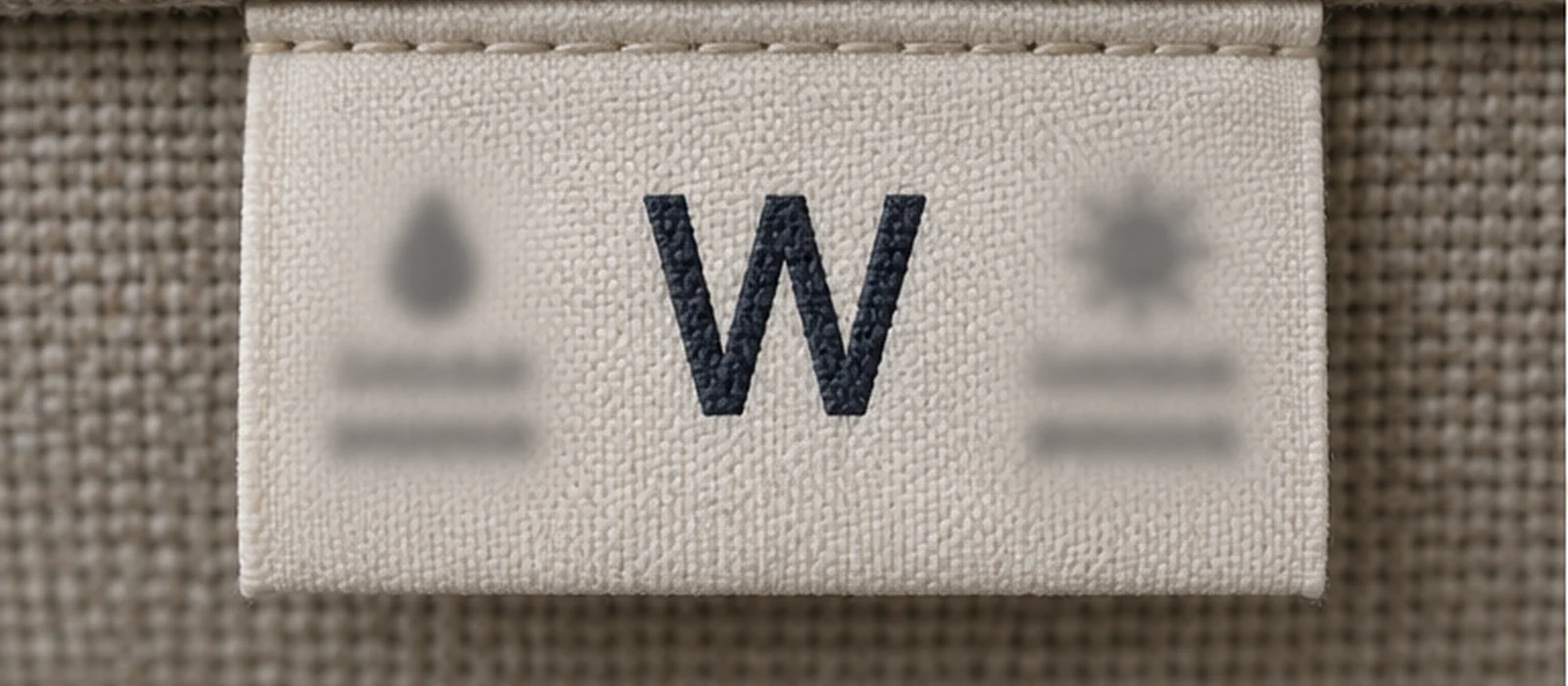
Cleaning in which a water-free organic solvent is the medium. Effective on oils, greases and waxes, and the only permitted wet route on an S-coded fabric.
Solvent cleaning uses a water-free organic solvent rather than water. Because solvents are non-polar, they dissolve non-polar soils — oils, greases, waxes, tar and body oils — and leave water-soluble soils largely untouched.
Its role in upholstery is twofold: it handles greasy soiling that water barely affects, and it avoids water on fabrics that cannot tolerate it. Regenerated cellulosics such as rayon and viscose lose much of their strength when wet and shrink irreversibly, so an S code is often really a warning about the fibre’s behaviour in water rather than about cleaning chemistry.
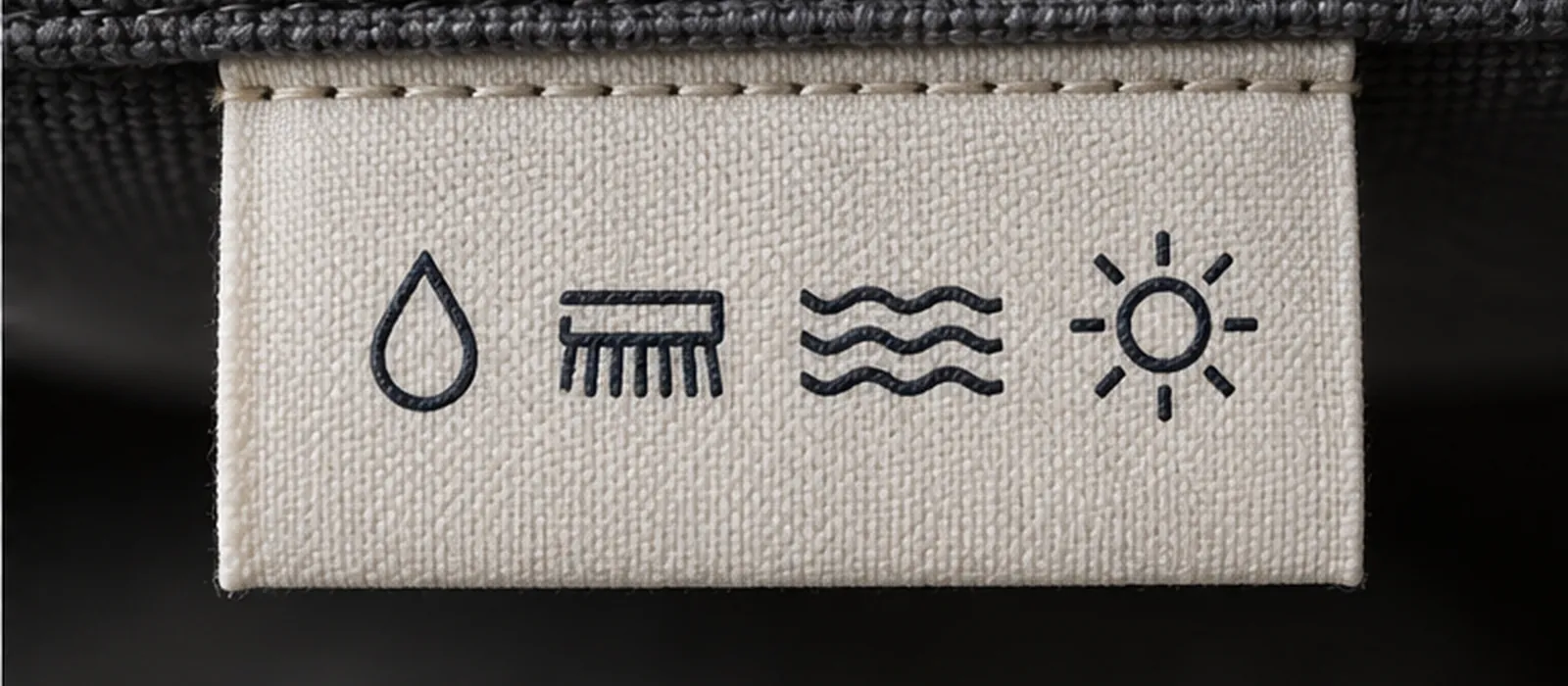
On a care label the process is indicated by the circle symbol. A letter inside it, commonly P or F, tells a professional cleaner which solvent class the fabric was tested against; bars underneath call for a gentler process; a crossed-out circle forbids it. These are trade instructions with no domestic equivalent.
Consumer solvent spotters exist for small greasy marks, and carry real constraints: ventilation, flammability, possible attack on foam backings and adhesives, and the same requirement to test an inconspicuous area first.
The term is used loosely. “Dry cleaning” in the upholstery trade often means low-moisture water-based cleaning, which is a completely different thing and is still water-based.