Protein stain
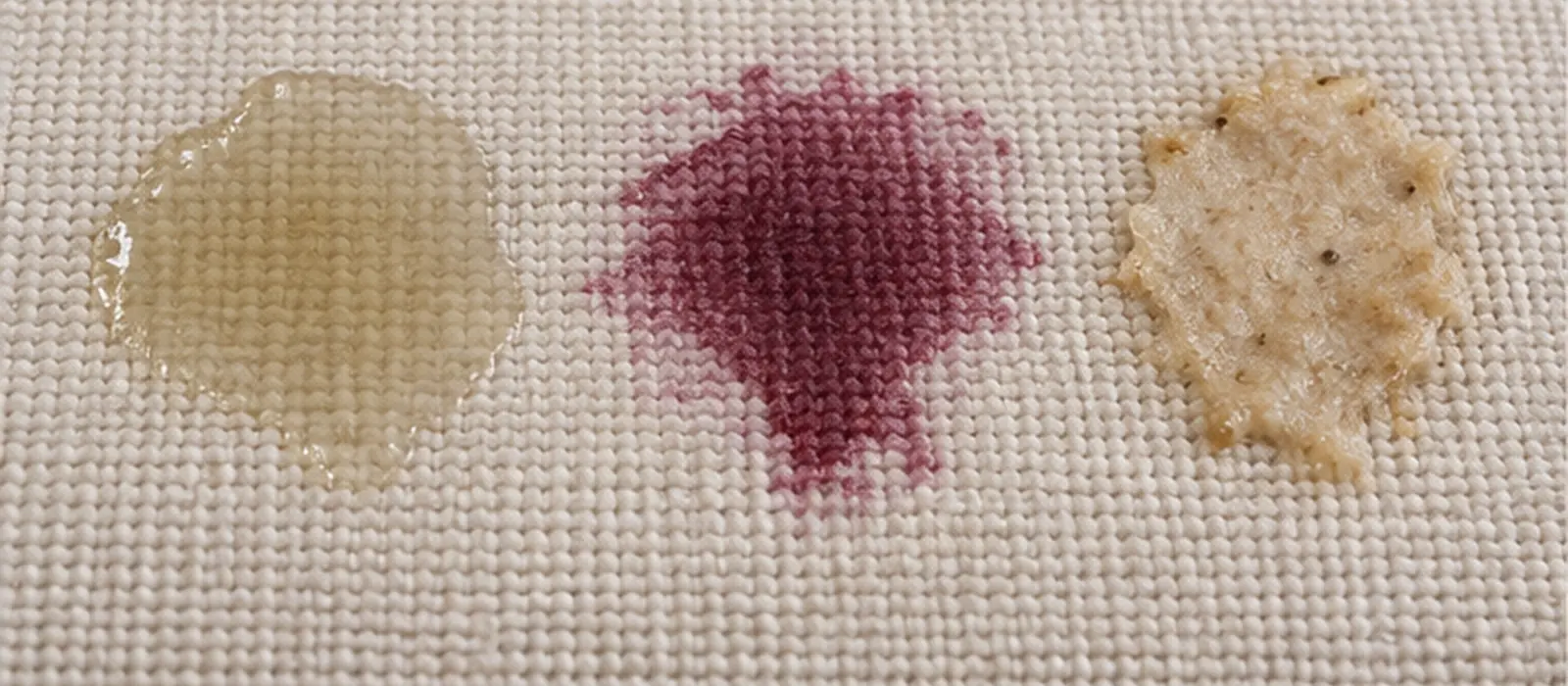
Blood, milk, egg, dairy and bodily fluids. Set irreversibly by heat, because heat denatures protein — the same reaction that turns an egg white solid.
A protein stain is one whose staining component is a protein: blood, milk, egg, dairy, perspiration, most bodily fluids, and food residues built on animal protein.
The governing rule is cold water and no heat. Heat denatures protein — the coiled molecule unravels and re-tangles into a new, permanent shape and bonds into the fibre. It is the same reaction that turns a clear liquid egg white into an opaque solid, and it is irreversible. Applying hot water to a blood stain cooks it into the fabric.
Cold water keeps the protein loose and soluble so it can be flushed out.
Treatment approaches:
- Cold water and blotting, immediately and repeatedly.
- Alkaline products, since protein-removal agents are generally alkaline where tannin removers are acidic.
- Enzyme (protease) products, which digest the protein directly, given adequate dwell time.
The critical exception: enzyme products must not be used on wool or silk. Those fibres are themselves proteins, and a protease cannot distinguish the stain from the substrate. The same caution rules out biological detergents on protein fibres.
Heat means any heat, not just hot water — a hairdryer used to speed drying over an untreated blood mark sets it just as effectively.
Many real spills are combination stains. Milky coffee is protein plus tannin plus fat, and needs treating in sequence rather than with one product.