Pile distortion
Also called: pile crush, nap distortion, shading
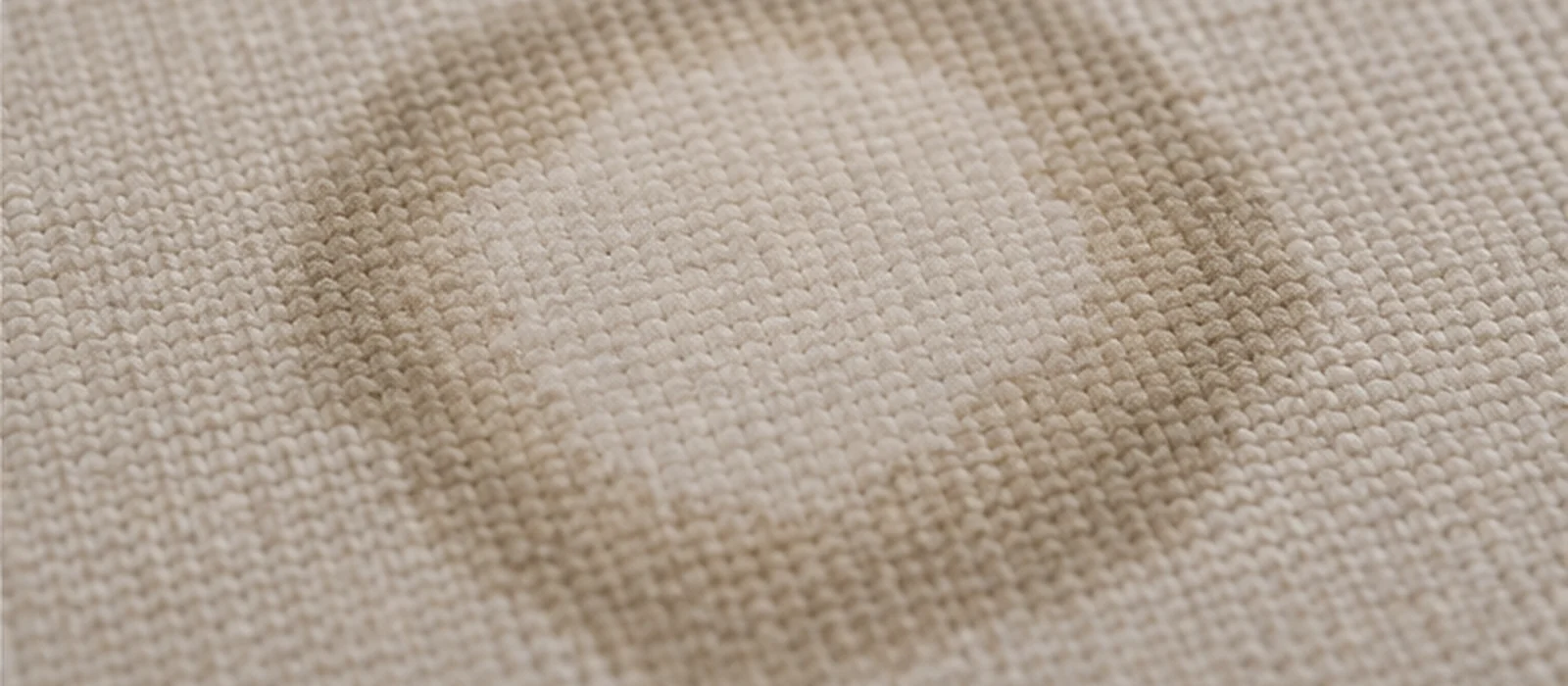
Uneven flattening or misalignment of a pile fabric's fibres. The resulting patch looks like a stain but is an optical effect — flattened fibres reflect light differently from upright ones.
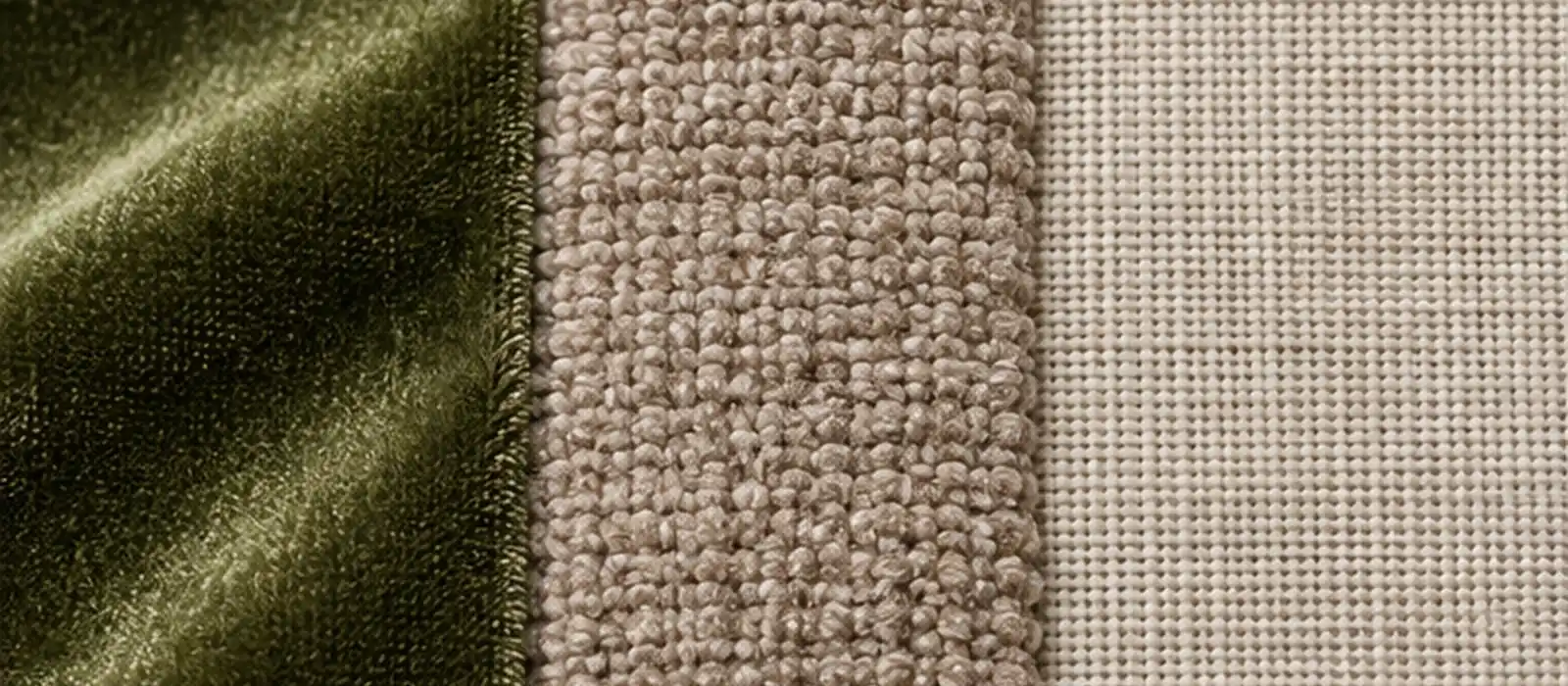
Pile distortion is the uneven alteration of the natural grain and consistency of a pile fabric — velvet, velour, chenille, cut-pile carpet — so that the fibres no longer lie consistently.
It matters because the appearance of a pile fabric is light reflected from the fibre tips. Fibres pressed flat reflect differently from upright ones, so a distorted area reads as a pale, washed-out patch that looks exactly like a stain and contains nothing to remove.
The common causes:
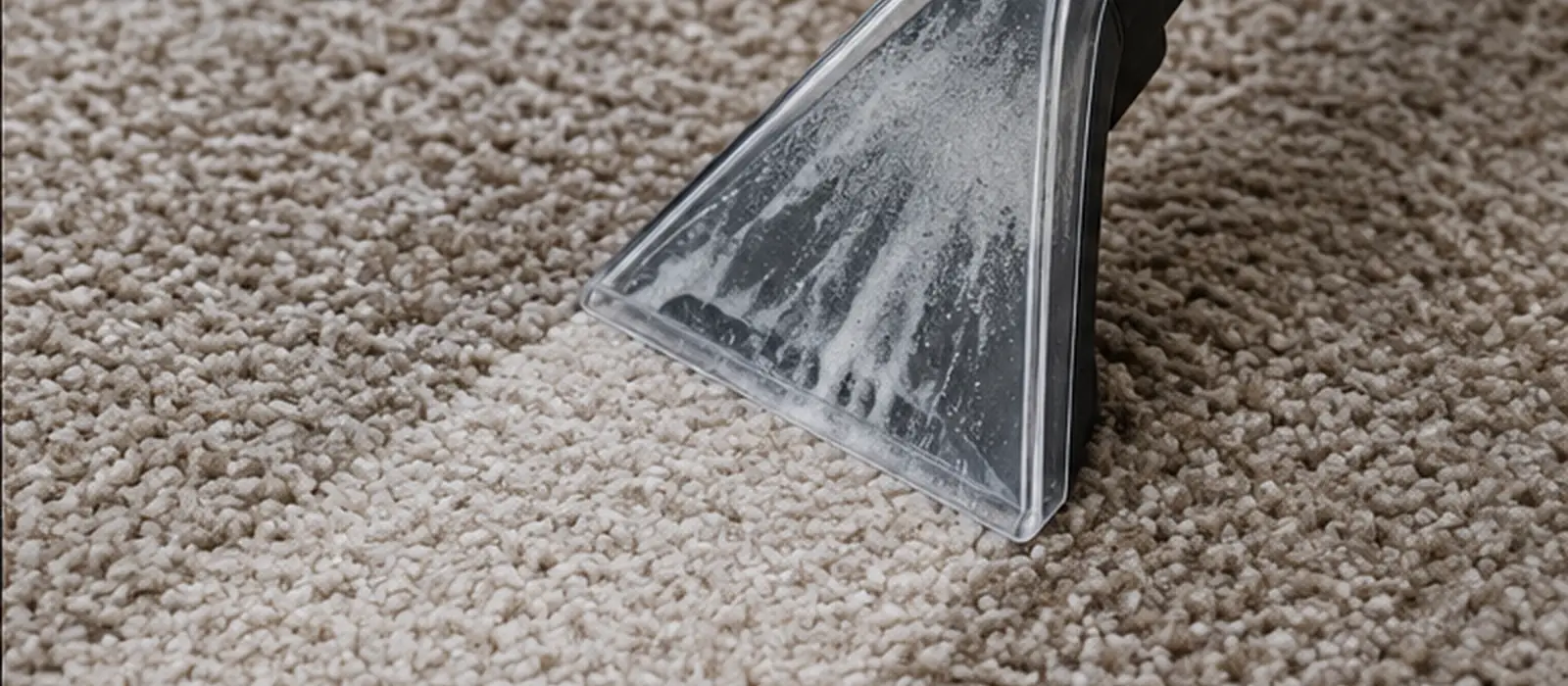
- Moisture and heat together. When velvet gets wet the upright fibres clump and dry flat. Natural fibres are especially susceptible to pile crush under moisture and heat, which is why domestic steam cleaners — delivering plenty of both — are a poor choice on pile fabric.
- Mechanical action. Rubbing or scrubbing pushes pile over and, on chenille, pulls the loosely held projecting fibres out of the yarn entirely, leaving a bald patch.
- Compression. Furniture legs, sustained sitting in one place, heavy objects.
Prevention is grooming: brush the pile in the direction of the nap with a soft brush regularly, so the fibres stay separated and consistently aligned. Blot spills; never rub.
Recovery is possible in some cases. Professionals use pile-lifting tools and tension brushes to bring the nap back after wet work — a mechanical intervention rather than a cleaning one. Where the pile has been crushed under sustained compression, or the fibres have been pulled out, recovery is partial at best.