Why stains are sorted into groups
Protein, tannin, oil-based and dye stains need opposite treatments. The grouping is not bureaucratic tidiness — it is a prediction about which chemistry will work and which will set the mark.
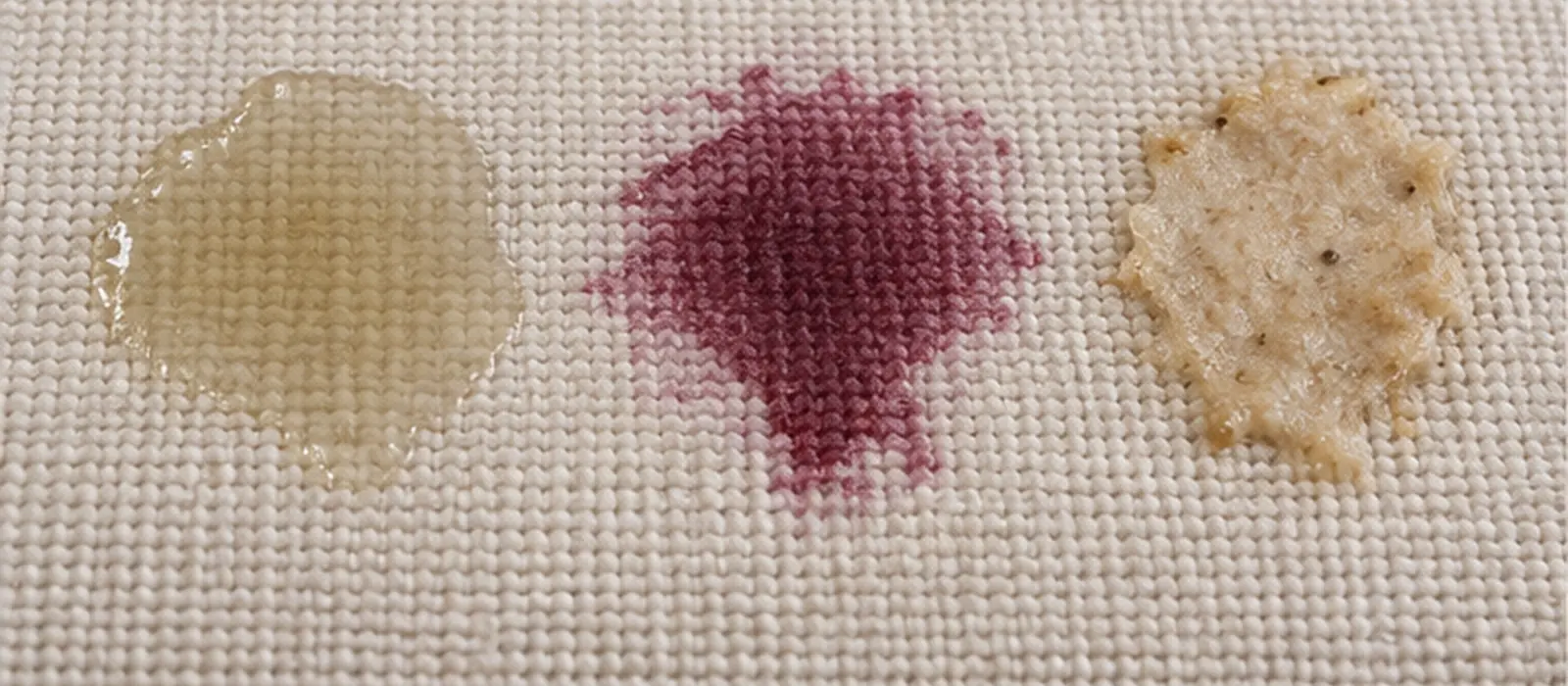
“Stain remover” is a category that promises more than any single chemistry can deliver. Stains are conventionally sorted into groups — protein, tannin, oil-based, dye, plus combination stains and a handful needing special treatment — and the grouping exists because the correct treatments are not merely different but opposed. Get the group wrong and the treatment does not just fail; it frequently locks the mark in.
Protein
Blood, milk, egg, dairy, perspiration, most bodily fluids, and food residues built on animal protein.
The rule: cold water, and never heat. Heat denatures protein — the coiled molecule unravels and re-tangles into a new, permanent shape. It is the same reaction that turns a raw egg white opaque and solid, and it is irreversible. Apply hot water to a blood stain and the protein effectively cooks itself into the fibre.
Cold water keeps proteins loose and soluble, so they flush out. Alkaline products help, as do enzyme (protease) products which digest the protein directly.
The critical exception has already been covered: enzyme products cannot go on wool or silk, because those fibres are protein and the enzyme cannot tell the difference.
Tannin
Tea, coffee, red wine, fruit juice, beer, soft drinks — the plant-derived group.
Tannin behaves as the mirror image of protein. Tannin removers are generally acidic, where protein removers are generally alkaline. Acidic cleaners handle mineral deposits, rust and tannin marks; alkaline cleaners handle grease, oils and protein.
Tannin is also the group where an alkaline product actively causes harm: alkali can darken and set a tannin mark, and — on a cellulosic fabric — high alkalinity is one of the conditions that triggers browning. Reaching for a strong general-purpose cleaner on a spilt cup of tea is a common way of converting a light mark into a dark permanent one.
Oil-based
Body oils, cooking grease, butter, cosmetics, ointments, crayon, tar.
These are non-polar and water does very little to them. They need either a solvent or a detergent with real surfactant capability — the surfactant works by surrounding the oil and making it dispersible in water it would otherwise refuse to mix with.
Unlike protein, oil often responds better to warm treatment, because warmth lowers the oil’s viscosity and lets it move. The two groups therefore want opposite temperatures, which is another reason a single all-purpose approach fails.
Synthetic fibres hold oil more stubbornly than natural ones, because they are oleophilic. The greasy sheen on the head-rest area of a polyester sofa is oil bonded to a fibre that likes it.
Dye
Ink, hair dye, food colouring, grass, some inexpensive textiles bleeding onto others.
This is the hardest group and the one where domestic attempts most often make things worse. Dyes are designed to bond to fibre, which is exactly what they have done. Treatment typically requires a reducing or oxidising agent or a solvent such as isopropyl alcohol — chemistries that are perfectly capable of removing the fabric’s own colour along with the stain.
A dye stain on a coloured fabric is the standard case for stopping and getting advice. There is frequently no product that removes the unwanted colour and leaves the wanted colour intact.
Combination stains
Many real spills are not one group. Milky coffee is tannin plus protein plus fat. A gravy mark is protein plus oil. Lipstick is oil plus dye.
These are worked in sequence, and the sequence is not arbitrary: generally the oil component comes off first with a solvent, then the water-soluble components with the appropriate water-based chemistry. Doing it the other way round leaves the oil film in place and the aqueous product cannot reach what is underneath it.
The one habit that covers most of it
Identify the group before choosing the product, and blot rather than rub throughout. Where the group is genuinely unclear, cold water and blotting is the treatment least likely to close off the options — it will not fix much, but it rarely sets anything, and it leaves a professional something to work with.