Working out what the fabric actually is
When the label is gone, the fibre has to be identified directly. What the three fibre families do, what the burn test shows, and why identification is a professional step under the upholstery standard.
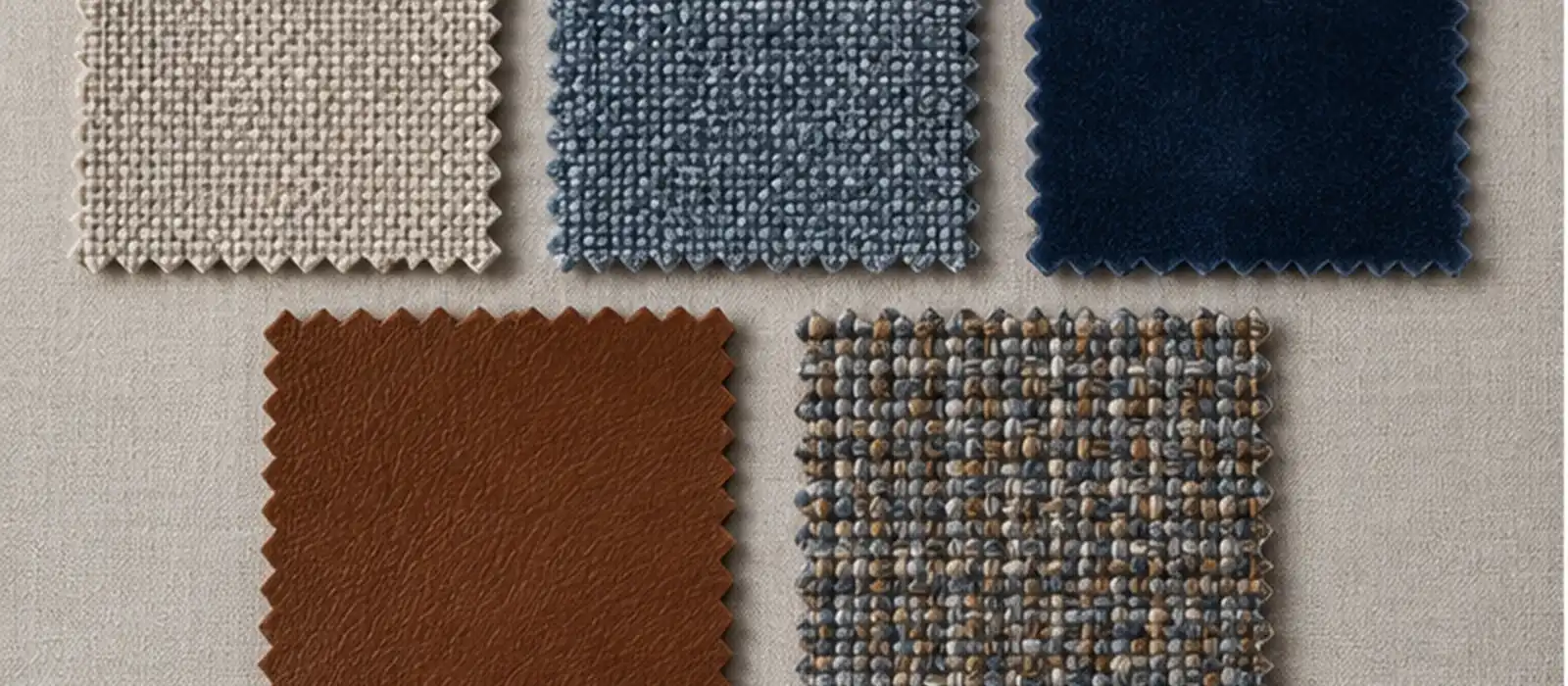
When the label has gone, the fibre has to be established some other way, because almost every subsequent decision depends on it. This is not an optional refinement: fibre, construction and style identification is the opening section of the professional upholstery standard, ahead of principles, equipment and method.
Three families, three behaviours
Nearly all upholstery fibre falls into one of three groups, and the group predicts most of what matters.
Cellulosics — cotton, linen, jute, viscose, rayon. Plant-derived. They absorb water readily, they contain lignin, and they are the group that browns. Viscose and rayon in particular lose a large share of their strength when wet, which is why so many rayon-containing fabrics carry an S code.
Protein fibres — wool, silk. Animal-derived. Chemically these are proteins, which is why they are damaged by alkalis, by bleach of any kind, and by enzyme products designed to digest protein soils. Wool has excellent natural soil resistance and a scaled cuticle that sheds liquids for a while before absorbing them.
Synthetics — polyester, nylon, acrylic, polypropylene, microfibre. Petrochemical. Generally the most tolerant of water-based cleaning, generally the most resistant to shrinkage, and generally the group that carries a W code. Their weakness is oil: synthetics are oleophilic, so body oils and greasy soils bond to them stubbornly.
Blends behave like their most vulnerable component. A cotton-polyester mix browns like cotton.
The burn test
The classical identification method is to burn a small sample and read three things: how it burns, what it smells like, and what residue it leaves.
Cellulosics ignite quickly, burn steadily with a bright yellow flame, keep burning after the flame is removed, smell of burning paper, and leave a soft grey ash that crumbles. Linen can be told from cotton by a stiffer hand and a hay-like rather than paper-like smell.
Protein fibres burn slowly, curl away from the flame, self-extinguish when the flame is removed, and smell unmistakably of burning hair. Wool and silk are genuinely hard to separate this way — the smell is the same and the ash differs only slightly.
Synthetics melt rather than burn, give a chemical or plastic smell, and leave a hard shiny bead. Polyester and nylon are often described as smelling sweetish; acetate and acrylic more acrid.
The obvious caveat: this requires a sample you can destroy, taken from a seam allowance or the underside, and it requires doing it safely away from the furniture. It is not something to perform on a visible surface, and on a piece where no spare fabric exists it is often simply not available.
Laboratory identification does exist and does not require burning anything — near-infrared imaging can classify textile fibres non-destructively — but it is not a domestic option.
What you can read without burning anything
A good deal, in practice.
Look at the construction. Cut pile standing proud of a backing is velvet or velour. A fuzzy, caterpillar-like yarn is chenille. A flat weave with irregular slubs and sharp creases is linen. A tight, slightly hairy flat weave that resists creasing is likely wool.
Handle it. Wool springs back from a squeeze; cotton stays crumpled. Polyester feels cool and slick; linen feels crisp and dry; viscose feels soft and drapes heavily, and goes limp and noticeably weak when damp.
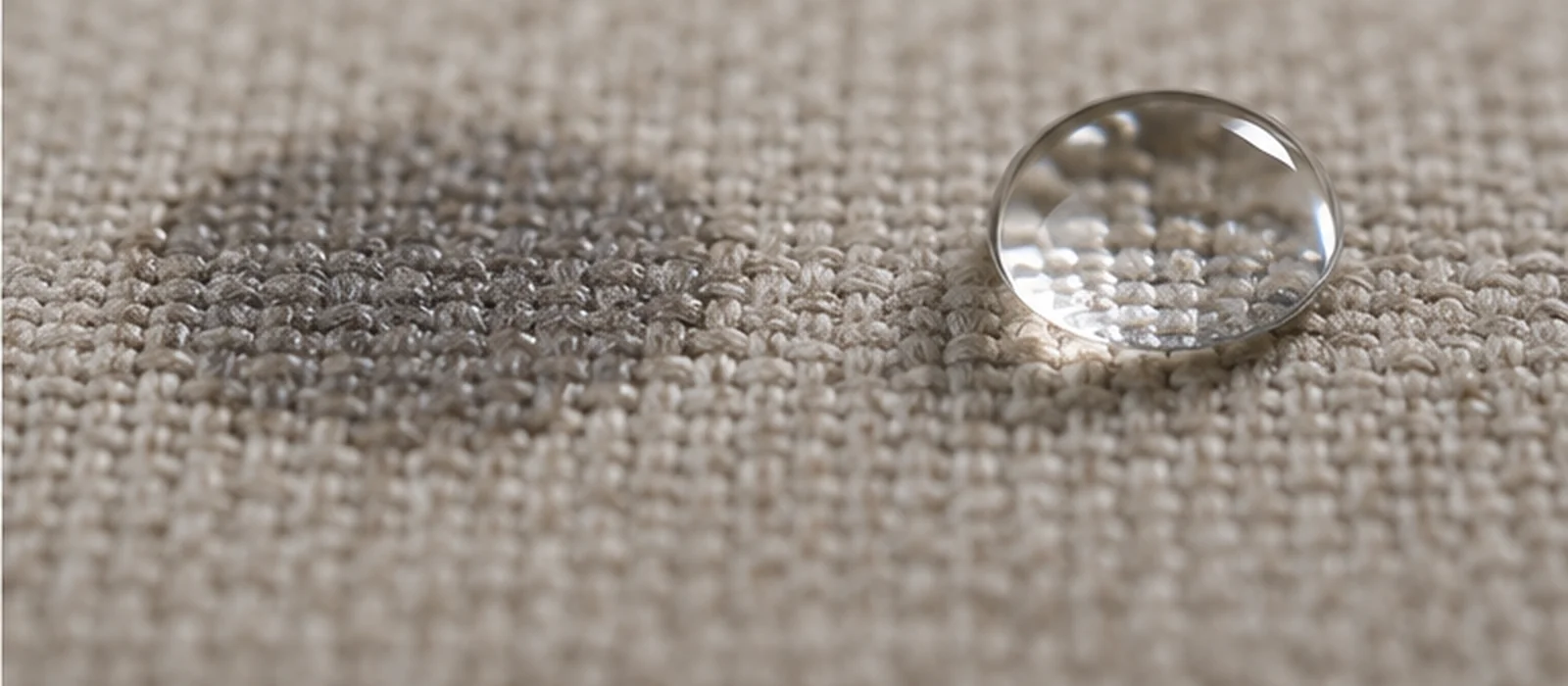
Try a drop of water on a hidden spot. Cellulosics absorb it almost immediately and darken. Wool beads it for several seconds before taking it up. Synthetics may bead it and hold it.
Look at the wear. Pilling in small hard balls suggests synthetic content. Fibres that have gone shiny and flattened under wear suggest a pile fabric that has been crushed rather than worn through.
The honest limit
None of this is conclusive. A blend can read as either parent, a finish can mask the fibre’s behaviour, and a backing can be a completely different material from the face. Where the piece is valuable, antique or unidentifiable, identification is exactly the thing a professional is being paid for — and it is the step that happens before anyone chooses a method, not after.