Damp, mould and odour in upholstery
Musty upholstery is a moisture problem before it is a cleaning problem. What the UK guidance says about damp and mould, why odour returns after cleaning, and when a piece is not salvageable.
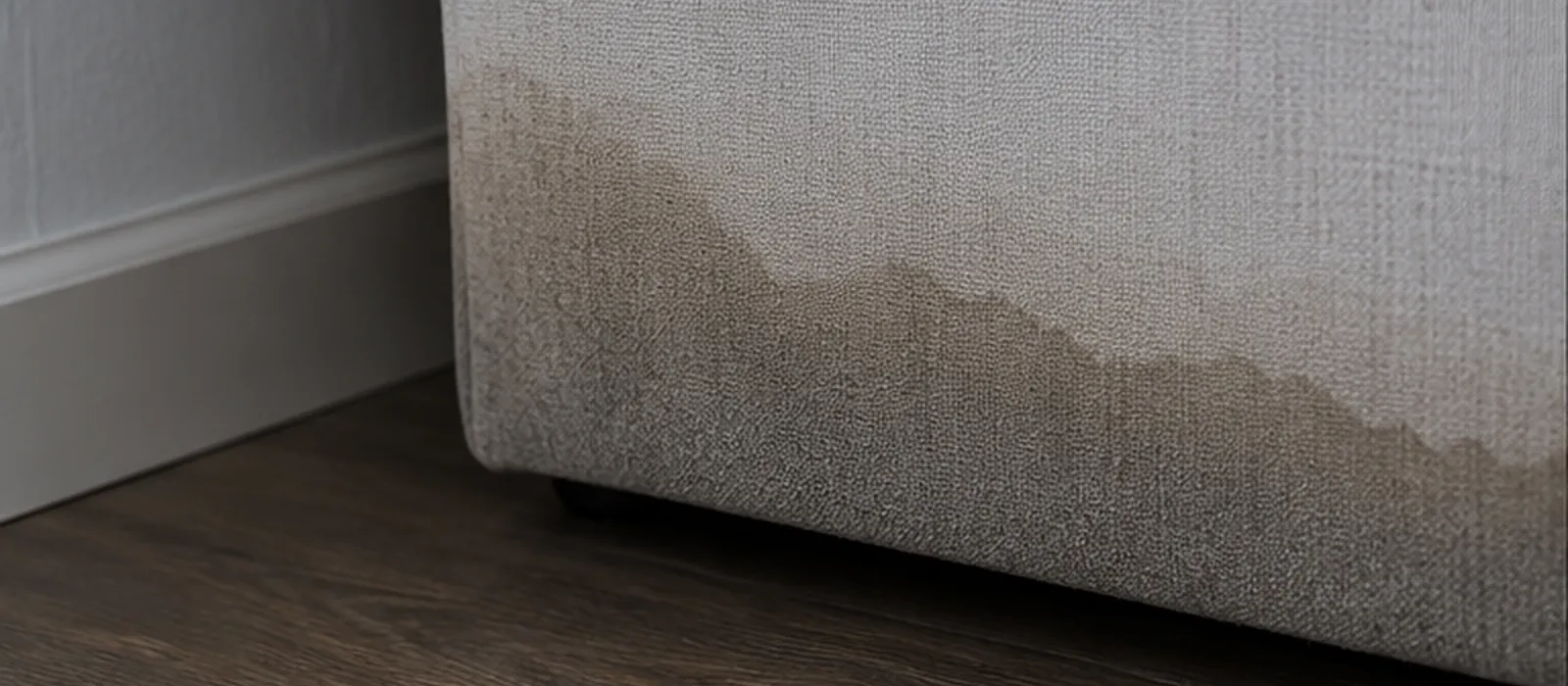
A musty sofa is a symptom. Treating the smell without dealing with the moisture behind it produces a piece of furniture that smells clean for a fortnight.
Damp and mould are a health matter, not a housekeeping one
UK guidance published in 2023 — Understanding and addressing the health risks of damp and mould in the home, produced following the inquest into the death of two-year-old Awaab Ishak — sets out the health effects of damp and mould and how they should be identified and addressed. It applies to accommodation providers, owner-occupiers and tenants alike.
Two points in it are worth carrying into any discussion of soft furnishings.
Damp and mould are not the result of “lifestyle choices”. The guidance states directly that tenants should not be blamed for damp and mould, and that responsibility for identifying and addressing the underlying causes sits with landlords. Mould on the back of a sofa pushed against an external wall is a building problem presenting on the furniture.
It is treated as a serious hazard. Landlords must ensure accommodation is free from serious hazards including damp and mould, and act promptly. Anyone whose home has visible mould has a route that is not “clean it off and hope”.
That framing matters here because the cleaning industry’s answer to a mouldy sofa — clean it — addresses the symptom while the cause continues.
Where the moisture comes from
Four sources cover most cases.
The building. Condensation on cold external walls, penetrating damp, rising damp. Furniture pressed against a cold wall traps a layer of still, humid air, and mould grows on the back panel first.
A previous cleaning. Over-wetting during extraction, particularly by an under-powered machine, leaves water in the foam and frame for days. This is the most common source of a sofa that started smelling musty shortly after being cleaned, and it is entirely self-inflicted.
An incident. A flood, a burst pipe, a radiator leak, a pet accident. Extraction equipment is used after events of this kind specifically to pull standing water out of carpet and upholstery as fast as possible — the priority being moisture removal against the clock, because what follows a soaking is microbial rather than cosmetic.
Ordinary use. Perspiration and humidity in a room with poor ventilation, accumulated over years.
Why odour comes back
Odour returning after a clean has two standard explanations.
The source was never removed. Odour lives in the filling, not the cover. Cleaning the cover addresses the part you can reach and leaves the reservoir. As the piece dries, wicking brings material back to the surface, and the smell returns with it.
The chemistry was wrong for the source. Urine is the clearest example. It contains uric acid, which crystallises as the liquid evaporates. Those crystals are not water-soluble, so washing removes the visible mark and the water-soluble components while leaving the crystals in place. The item then smells clean until humidity rises, at which point the crystals take up moisture and the odour returns. Enzyme products exist specifically because they break down uric acid where detergents cannot, and they require genuine dwell time to work.
Masking products — deodorisers, fragrances, odour “neutralisers” — do not address either explanation. They add a smell on top of a smell.
The order of operations
- Find and stop the moisture source. Ventilation, heating, the building fault, the leak. Nothing else is durable until this is done.
- Dry the item thoroughly. Airflow, warmth, time. Move it away from the wall.
- Treat the residue with chemistry matched to it — enzyme products for protein and urine sources — with adequate dwell time.
- Dry it thoroughly again, quickly.
Cleaning before drying, or drying before fixing the source, produces a temporary result.
When a piece is not worth saving
Some honesty is owed here, because the cleaning trade is not always forthcoming about it.
Where mould has grown inside the foam, where a large-volume soaking has been left wet for days, or where contamination has repeatedly saturated the filling, the affected material is usually beyond in-situ treatment. The foam is the problem, and the foam cannot be cleaned in place.
The realistic options then are replacement of the filling or replacement of the piece. A cleaner who says so is being straight with you. Repeated wet cleaning of a piece in that condition adds moisture to a mould problem, which is the opposite of the treatment.
Anyone with respiratory symptoms, a diagnosed mould allergy or a compromised immune system should be taking medical advice about exposure rather than deciding the question on how the sofa looks.