Practical tips for spills on carpets and upholstery
The first few minutes decide most outcomes. A short, ordered procedure for dealing with a fresh spill on a carpet or a sofa, and the things not to do while you are dealing with it.
Almost every spill that becomes permanent was recoverable for the first few minutes. This page is the short version: what to do, in order, and what not to do while doing it.
The order of operations
1. Lift the bulk first. Scoop solids with a spoon, working inwards. Blot liquids with white absorbent cloth or tissue. Do this before any product goes anywhere near it — every millilitre removed now is one that cannot spread or soak into the backing.
2. Work from the outside in. Start at the edge of the mark and move towards the centre. The instinct is the opposite, and the opposite turns a small concentrated mark into a large diffuse one that is much harder to resolve.
3. Use white cloth only. Coloured cloths and patterned kitchen roll can transfer their own dye into damp fabric, and a white cloth lets you see what is coming out.
4. Blot. Do not rub. Rubbing drives soil deeper into the fibre, distorts pile permanently on velvet and chenille, and felts wool. Press, hold, lift, move to a clean part of the cloth, repeat.
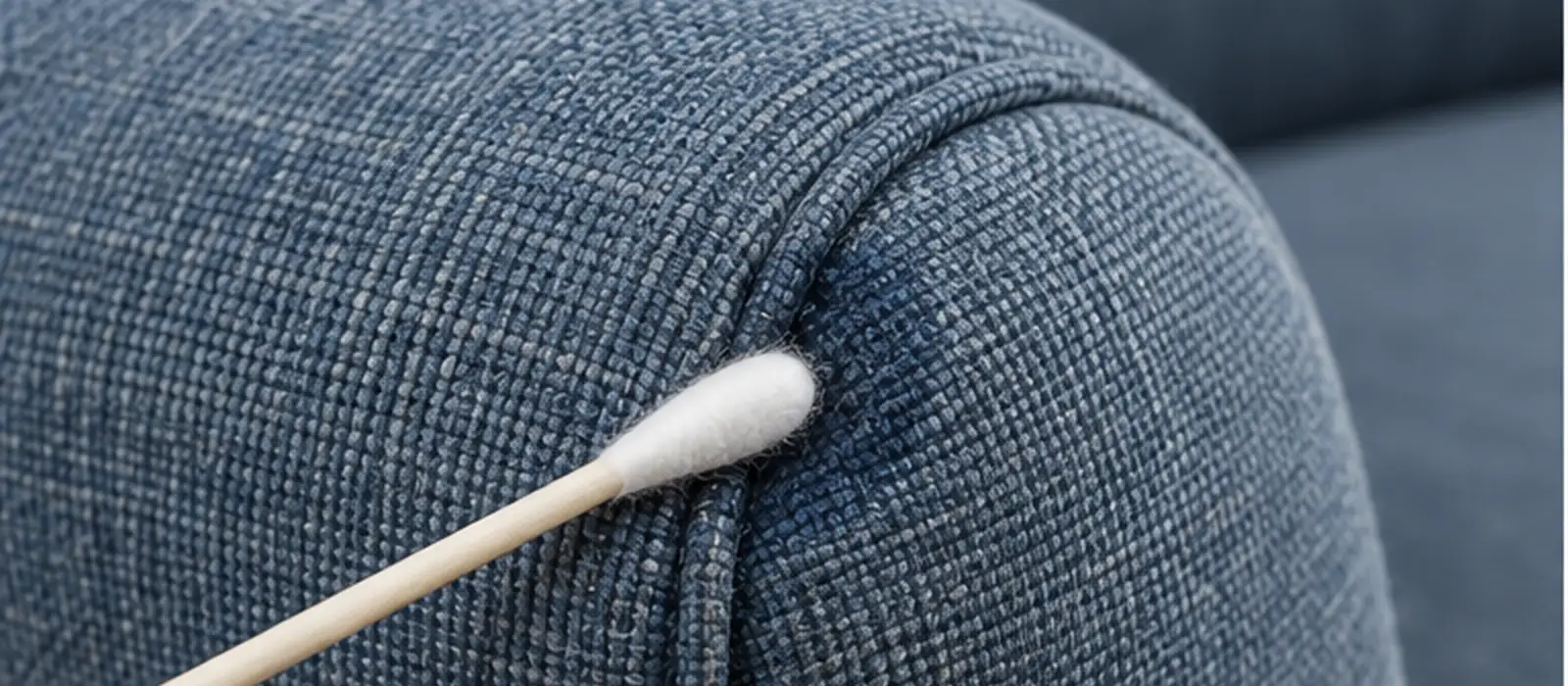
5. Test before any product. A few drops in a hidden place, blotted onto white cloth, with the same dwell time you intend to use. Any colour on the cloth means stop.
6. Use small amounts, and blot between applications. Several light applications remove more than one heavy one and leave far less moisture behind.
7. Dry it properly. Airflow, and as fast as is practical. Slow drying is what turns a successfully treated spot into a brown ring two days later.
What not to do
Do not apply heat to anything unidentified. Heat sets protein permanently, and a hot appliance on a synthetic fabric can glaze or melt the fibre.
Do not reach for household bleach. It destroys wool and silk outright and removes colour from almost everything else.
Do not use a general-purpose spray because it is to hand. Kitchen and bathroom sprays are formulated to be strongly alkaline for grease, which is close to the worst choice on a tannin mark or a cellulosic fabric.
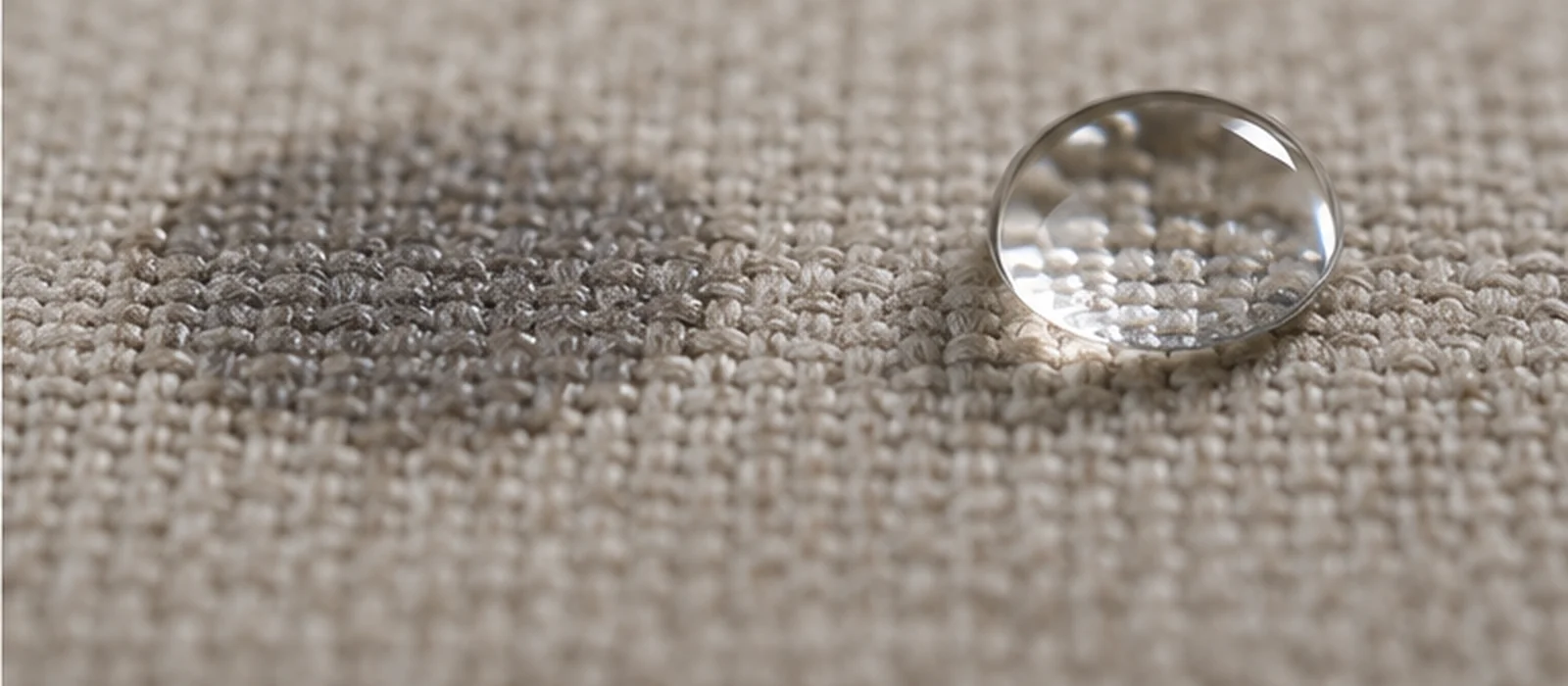
Do not soak it “to loosen the stain”. This is the single most damaging piece of folk advice in fabric care. It pushes the spill through the fabric into the filling and the backing, where it is beyond reach, and it sets up the conditions for browning and for mould.
Do not keep going indefinitely. Repeated aggressive attempts on a mark that is not shifting will damage the fabric long before they remove the stain. Two or three careful passes, then stop and reassess.
The mark that reappears
A spot treated successfully, dried, and then found again two days later as a faint brown or yellow shadow has almost certainly wicked. Residual soil and moisture deeper in the pile or the filling travelled back up to the surface as the piece dried.
It is not a failure of effort and re-treating it harder does not help — more moisture creates more wicking. The fix is less water and faster drying: blot the area, weight it with a pad of white towelling to draw moisture upward into the towel rather than the fabric face, and get air moving over it.
Product choice, briefly
There is no brand recommendation on this site. What is worth knowing is that certification schemes exist precisely because so many general products are wrong for particular fibres — the WoolSafe scheme covers consumer as well as professional products and is re-evaluated annually, which at least removes the guesswork on wool.
Beyond that, the useful habit is to read what a product is for — grease, protein, tannin — and match it to the group the spill belongs to, rather than buying something labelled for everything.
When to stop and call someone
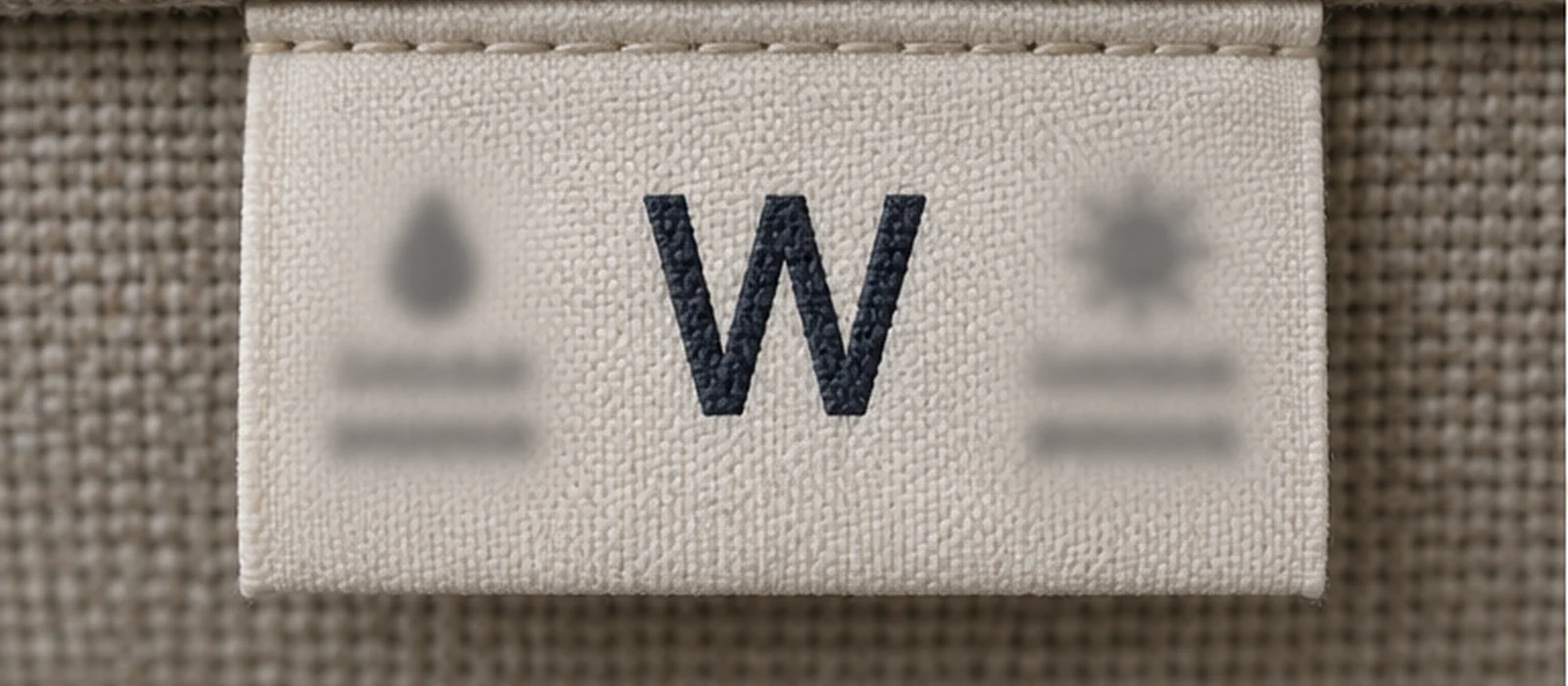
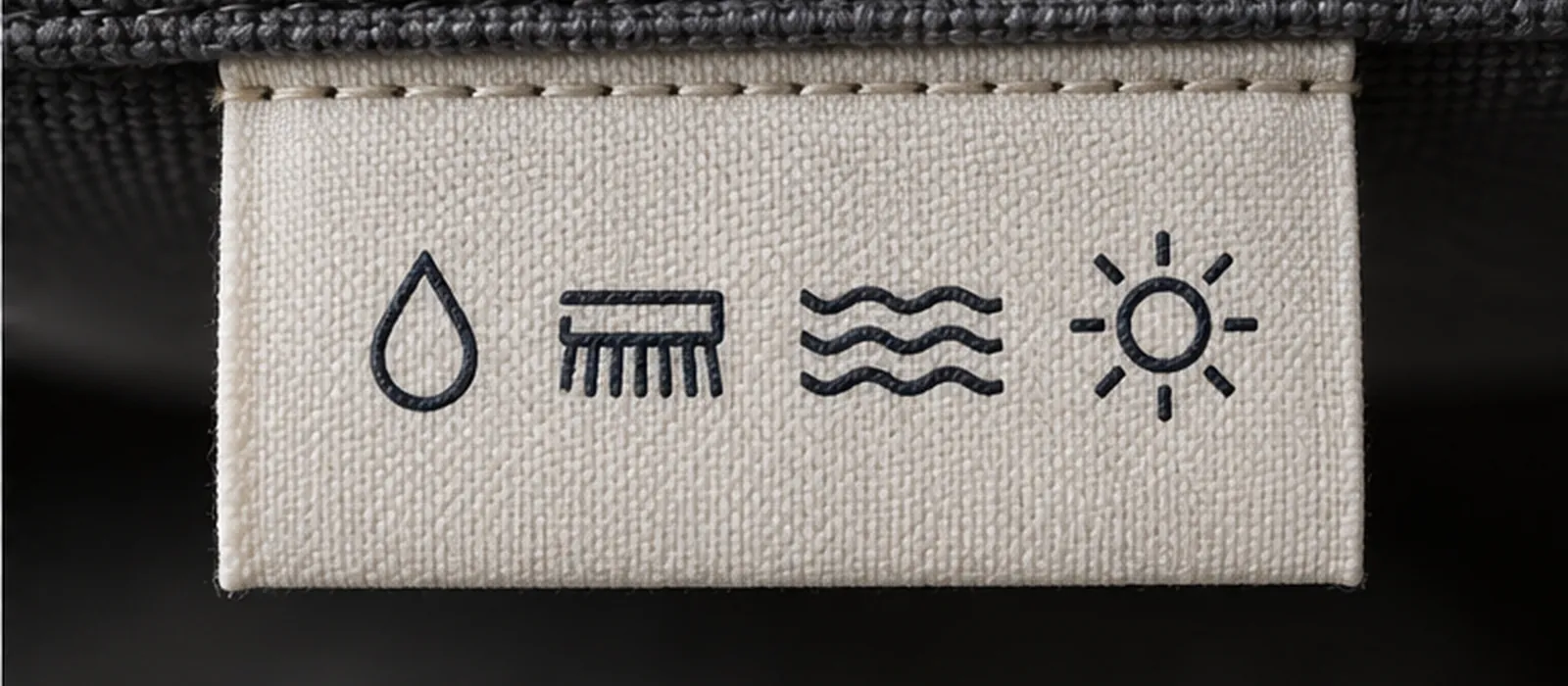
Stop if the fabric is coded S or X, if it is velvet or chenille and the mark is wet, if the spill covers more than a hand’s width, if it has reached the filling, if it is a dye or an unknown chemical, or if a colourfastness test failed. Those are the cases where continuing costs more than stopping.