Care labels: what the symbols actually commit the maker to
The five symbol shapes of the international care labelling code, what the circle means for upholstery in particular, and why a label states a limit rather than a recommendation.
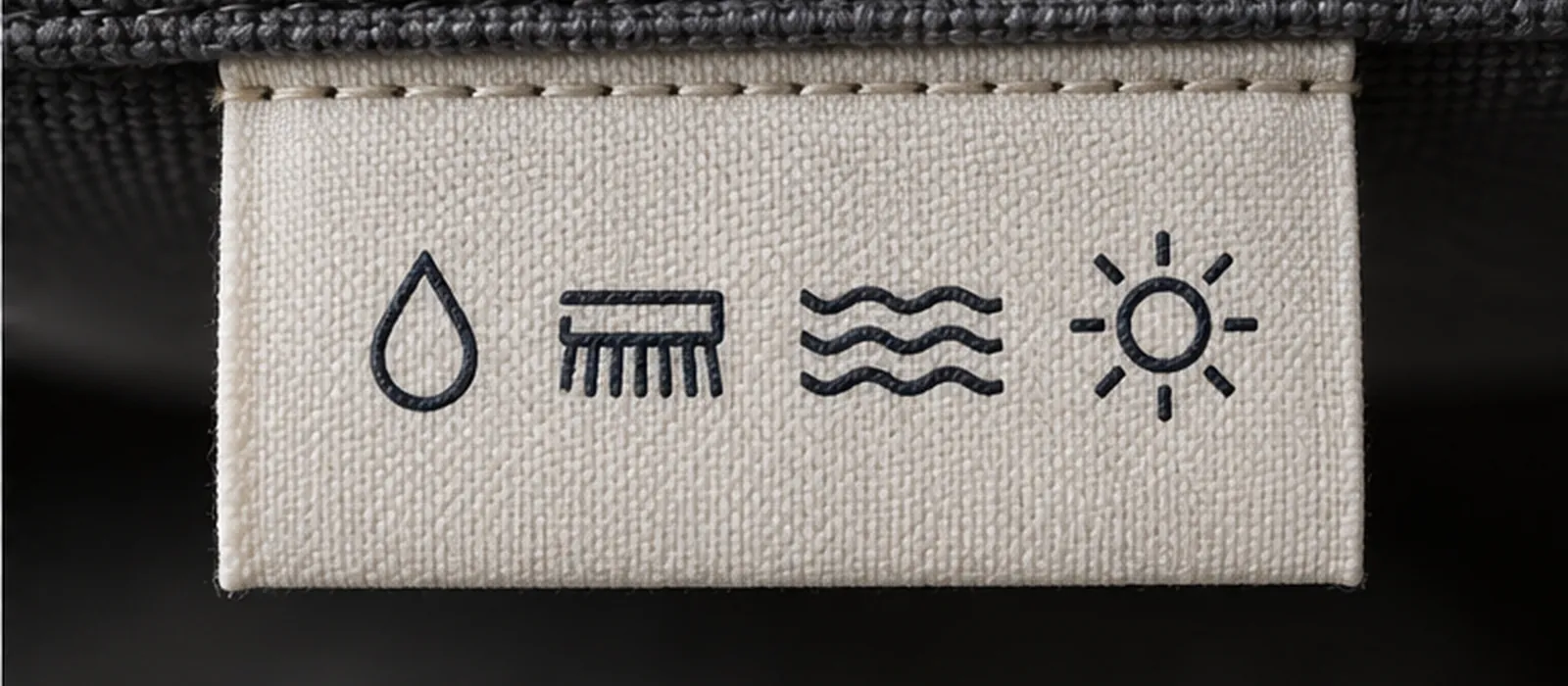
The pictograms on a textile care label are not decoration and they are not a house style. They are a standardised code, and the standard behind them says something precise about what they mean.
Five shapes, one grammar
The international system is built on five basic shapes, each owning one process:
- the washtub — domestic washing
- the triangle — bleaching
- the square — drying
- the iron — ironing
- the circle — professional textile care, meaning dry cleaning and professional wet cleaning
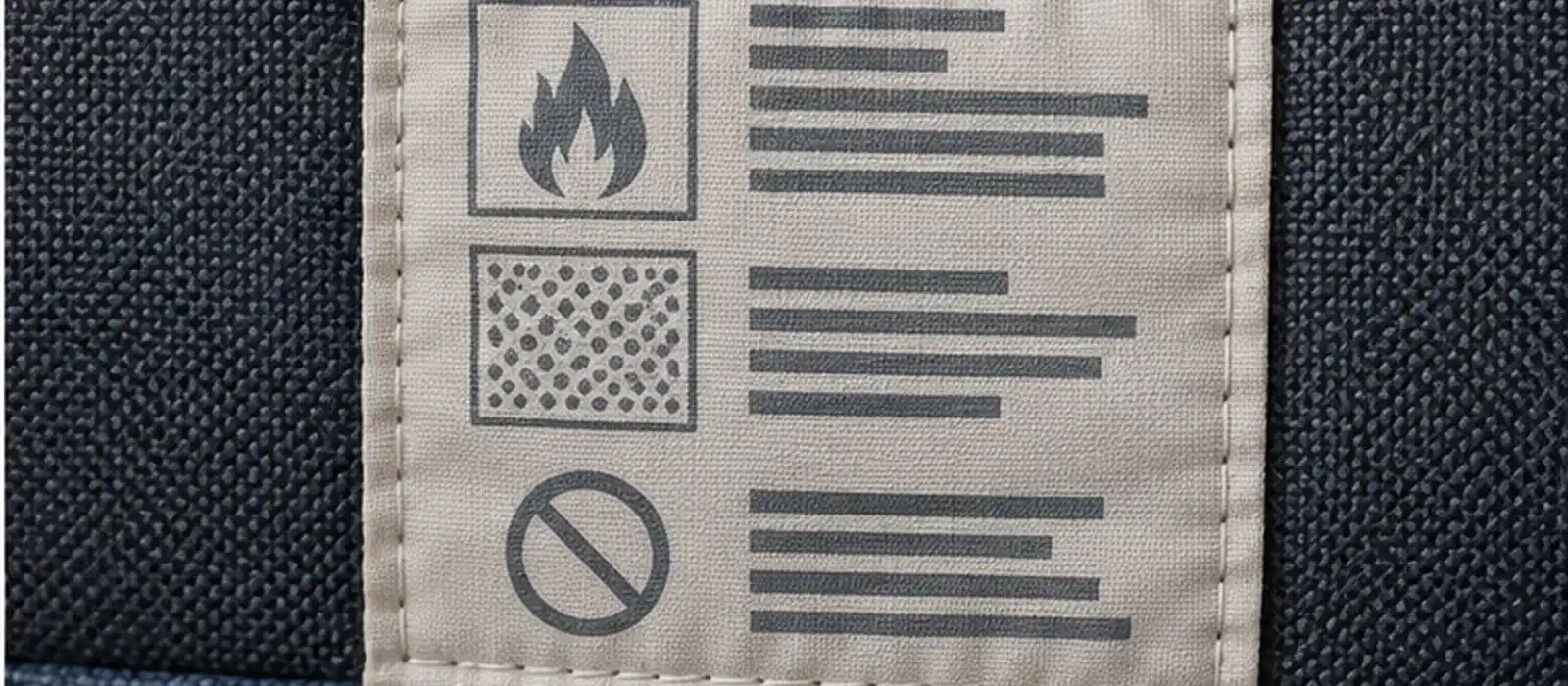
Modifiers sit on top of the shape. Dots and numbers set a temperature ceiling, bars underneath call for a gentler mechanical action, and a cross through any symbol forbids that process outright.
The symbols are owned as trademarks by GINETEX, the International Association for Textile Care Labelling, and their system is the origin of the international standard ISO 3758. The standard is reviewed on a roughly five-year cycle; the 2023 revision realigned several symbols — hand wash, do not wash, do not bleach and do not iron — with the GINETEX drawings, so labels of different ages can differ slightly in appearance while meaning the same thing.
The one sentence that matters most
The standard’s own framing is the useful part: a care label states the most severe treatment that does not cause irreversible damage.
That is a ceiling, not a recommendation. A label permitting a 40 °C wash is not advising 40 °C; it is saying 40 °C is the point past which the maker will not stand behind the fabric. Reading the label as a suggestion — and then rounding up because the item looks grubby — is a recurring cause of shrunken loose covers.
It also means a permissive label is no guarantee of a good outcome. Nothing in the code speaks to pile, drape, dye stability or how a seam behaves. It speaks to fibre survival.
The circle is the one that matters for upholstery
For upholstery, the circle is usually the operative symbol, because most upholstery is not going in a washing machine.
A plain circle indicates professional textile care is permitted. Letters inside it — P or F — tell the professional which solvent class the fabric was tested for, and bars underneath call for a reduced-severity process. A crossed-out circle means no professional cleaning of that type at all.
Those letters are addressed to a cleaner, not to a householder. They are not instructions anyone can act on at home, and there is no domestic equivalent of the equipment involved.
Where labels and cleaning codes part company
Care labelling and upholstery cleanability codes are two different systems solving two different problems, and they coexist awkwardly.
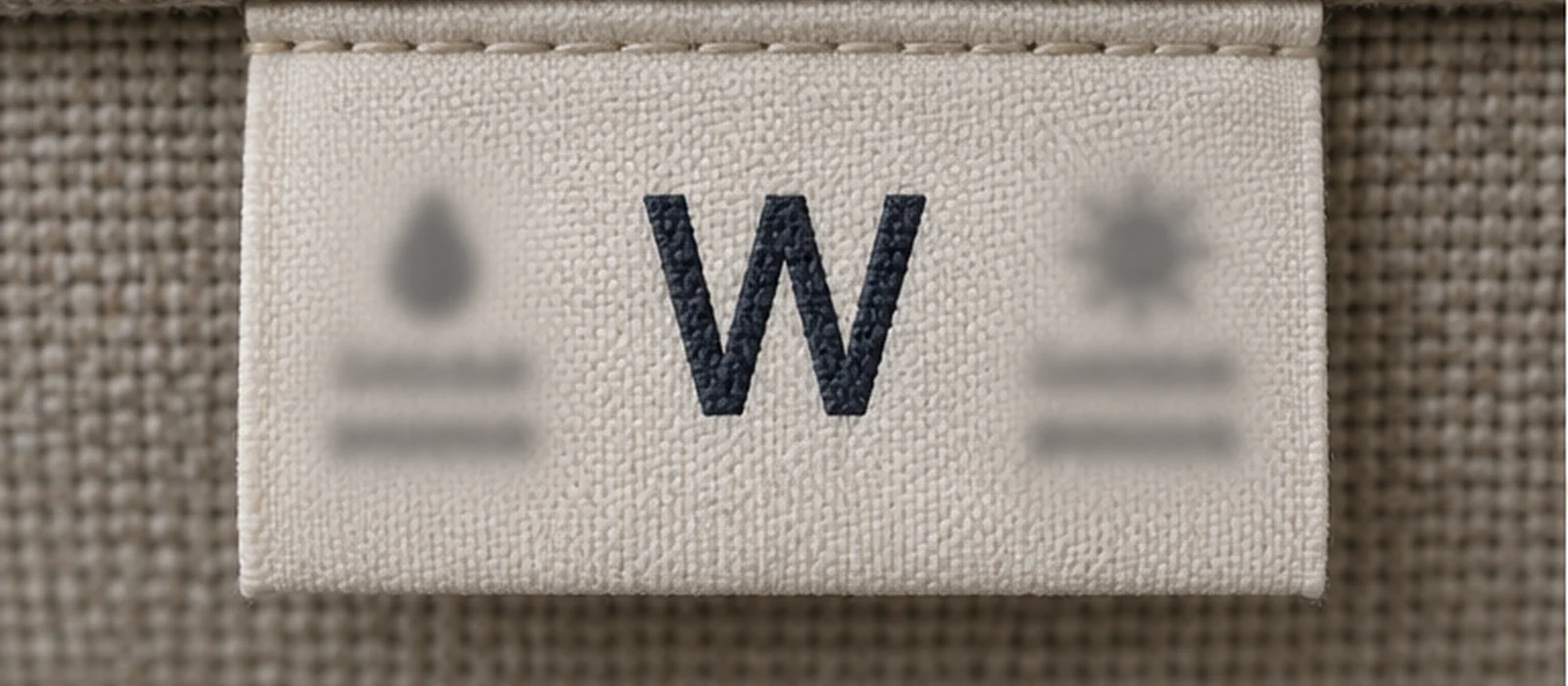
The care label is a textile standard, and it is at its most complete on things that can be washed: loose covers, cushion covers, curtains, throws. The W/S/WS/X cleaning code is an upholstery-trade convention, and it appears on the fixed covering of the furniture itself.
Where a piece carries both, they should agree. Where they disagree, the more restrictive one governs — a fabric described as solvent-only on one tag does not become water-safe because another tag omits the restriction.
Labels go missing
Upholstery labels are removed, cut off during reupholstery, faded past reading, or were never attached in the first place. Loose and stretch covers sold separately from the furniture are routinely outside the labelling requirements that apply to the furniture.
A missing label does not lower the risk; it removes the information. What remains is identifying the fibre directly and testing before treating — which are the next two pages.